
Movement-Focused Care · West Valley City, Utah
Traction Therapy in West Valley City, UT
A Thoughtful Approach to Spinal Traction.
Traction is a supervised technique that applies controlled pulling forces along the spine. At Columna Care, we begin with a careful evaluation to understand whether it may fit your needs—or whether another approach is more appropriate.
Every recommendation begins with an individual assessment. Traction is not appropriate or effective for every condition.
Individualized Evaluation
Safety & Suitability First
Informed Care Decisions
UNDERSTAND YOUR OPTIONS
What Is Spinal Traction?
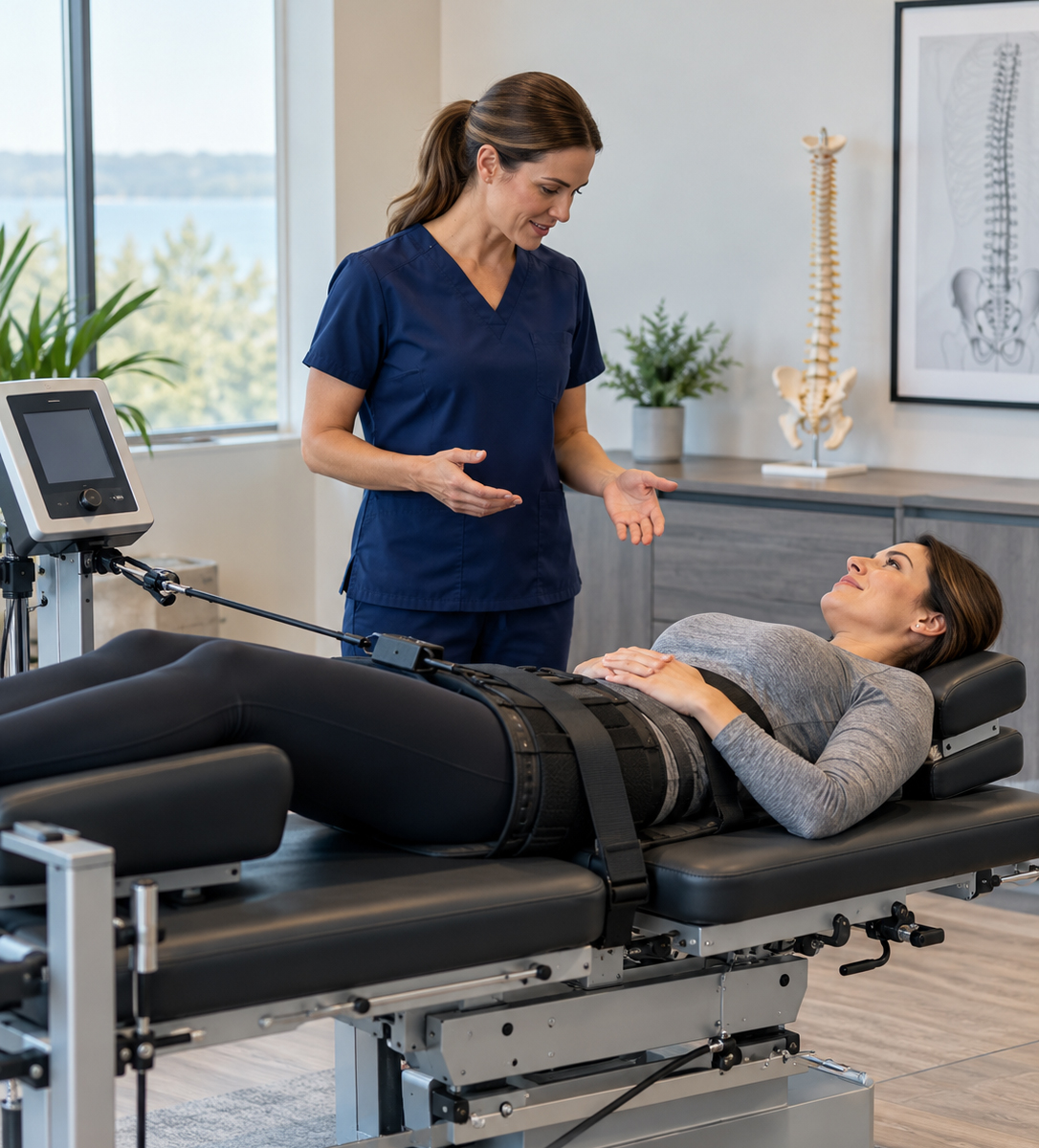
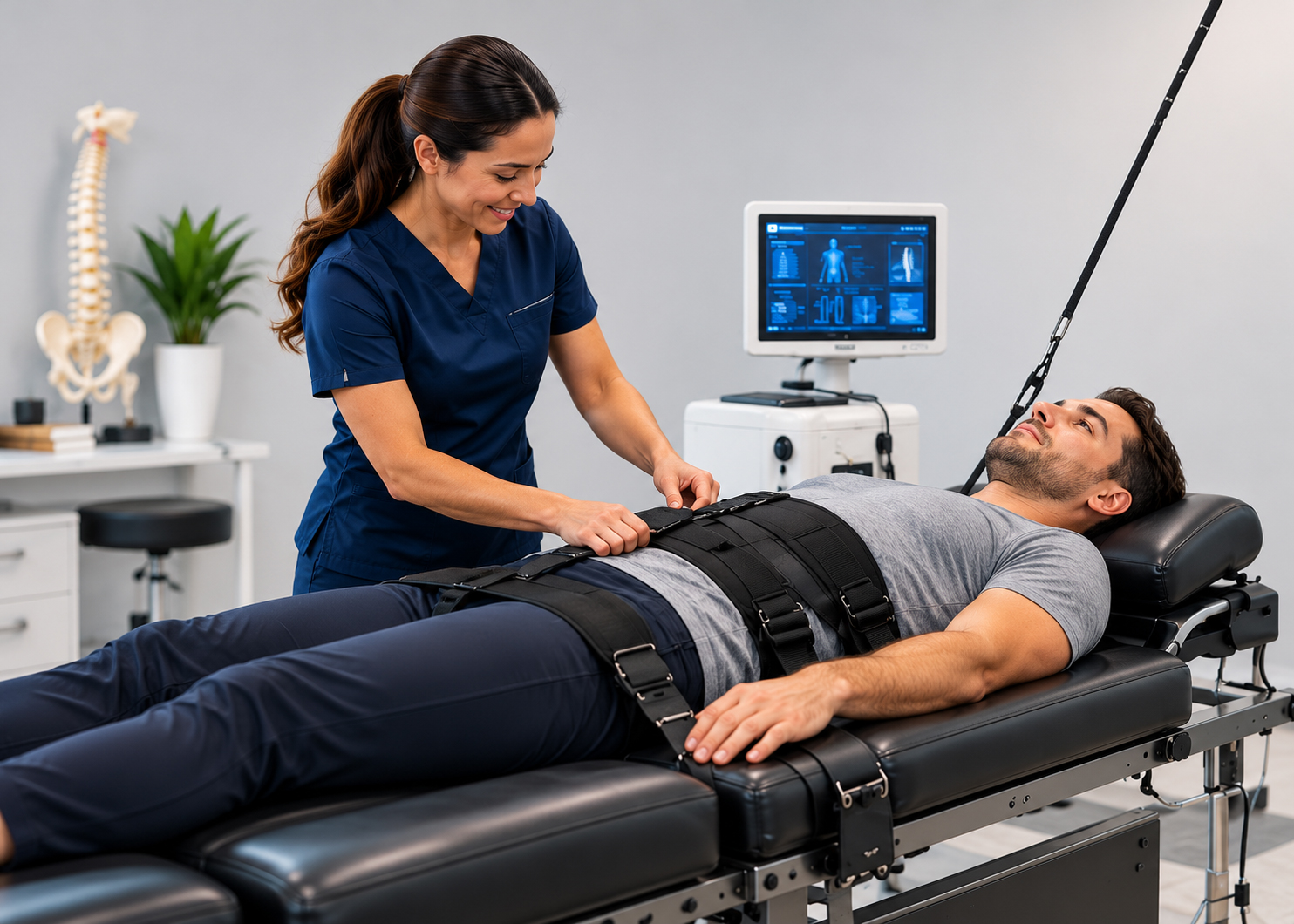
Spinal traction is a technique that uses a controlled pulling force on a portion of the spine. Depending on the area being considered and the care setting, the technique may be performed manually or using specialized equipment.
Traction is sometimes discussed for certain spine-related symptoms. However, it does not work for everyone, and it should not be treated as an automatic solution to back or neck pain.
At Columna Care, your symptoms, health history, examination findings, and personal goals guide the conversation about suitable care.
- An individual clinical assessmen.
- Explanation of benefits, limitations & alternatives.
- Decisions that support your movement goals
EVIDENCE & CLINICAL CONTEXT
One Technique. Different Clinical Situations.
Your healthcare provider should explain the available evidence, potential risks, and options relevant to your situation. The information on this page does not replace an individual medical evaluation.
Cervical Traction
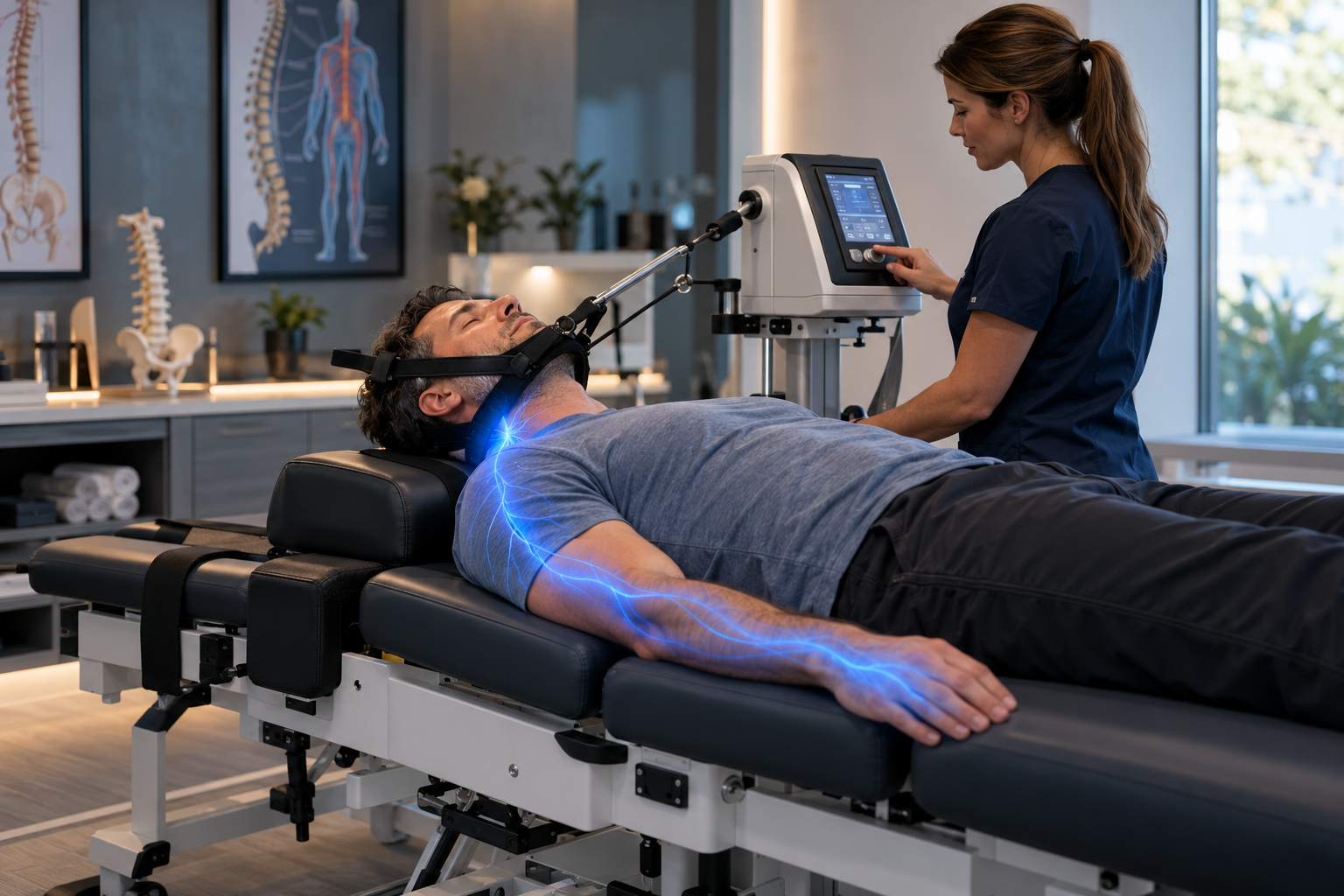
For selected people with chronic neck pain that extends into the arm, intermittent cervical traction may be considered together with exercise and other appropriate care.
Lumbar Traction
Research does not support routine traction for low-back pain with or without sciatica. Other evidence-based approaches may be more appropriate.
WHEN TO DISCUSS THE OPTION
When Might Traction Be Considered?
The right decision depends on your clinical findings. These are reasons to start a conversation with a qualified provider—not a list of conditions automatically treated with traction.
01 — Selected Neck & Arm Symptoms
For certain persistent neck-related symptoms that extend into the arm, a provider may discuss cervical traction as one component of a broader care plan.
02 — A Care Plan Based on Your Evaluation
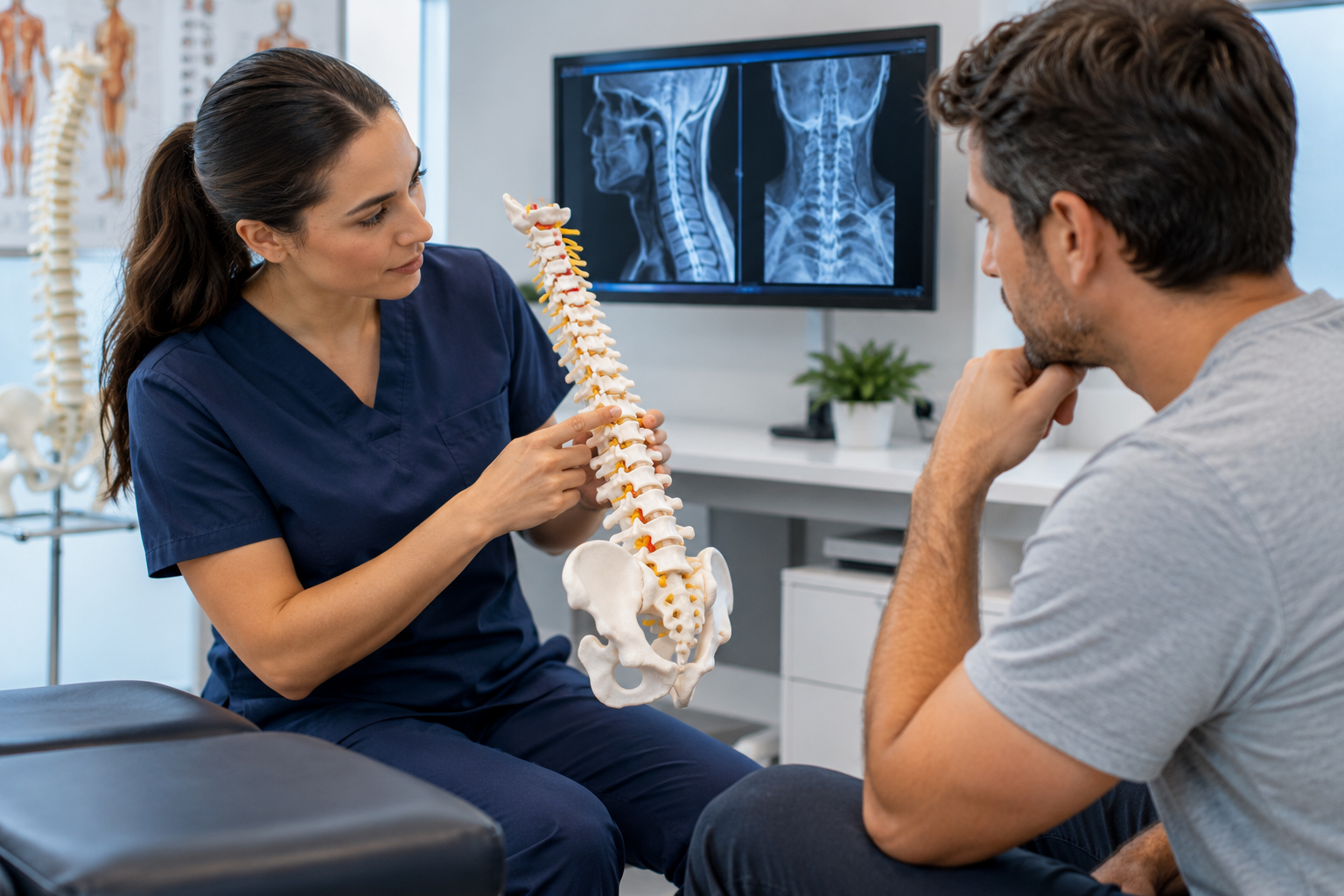
A clinical assessment helps clarify whether traction is reasonable to consider and what other care options may fit your needs.
03 — Support Alongside Active Rehabilitation
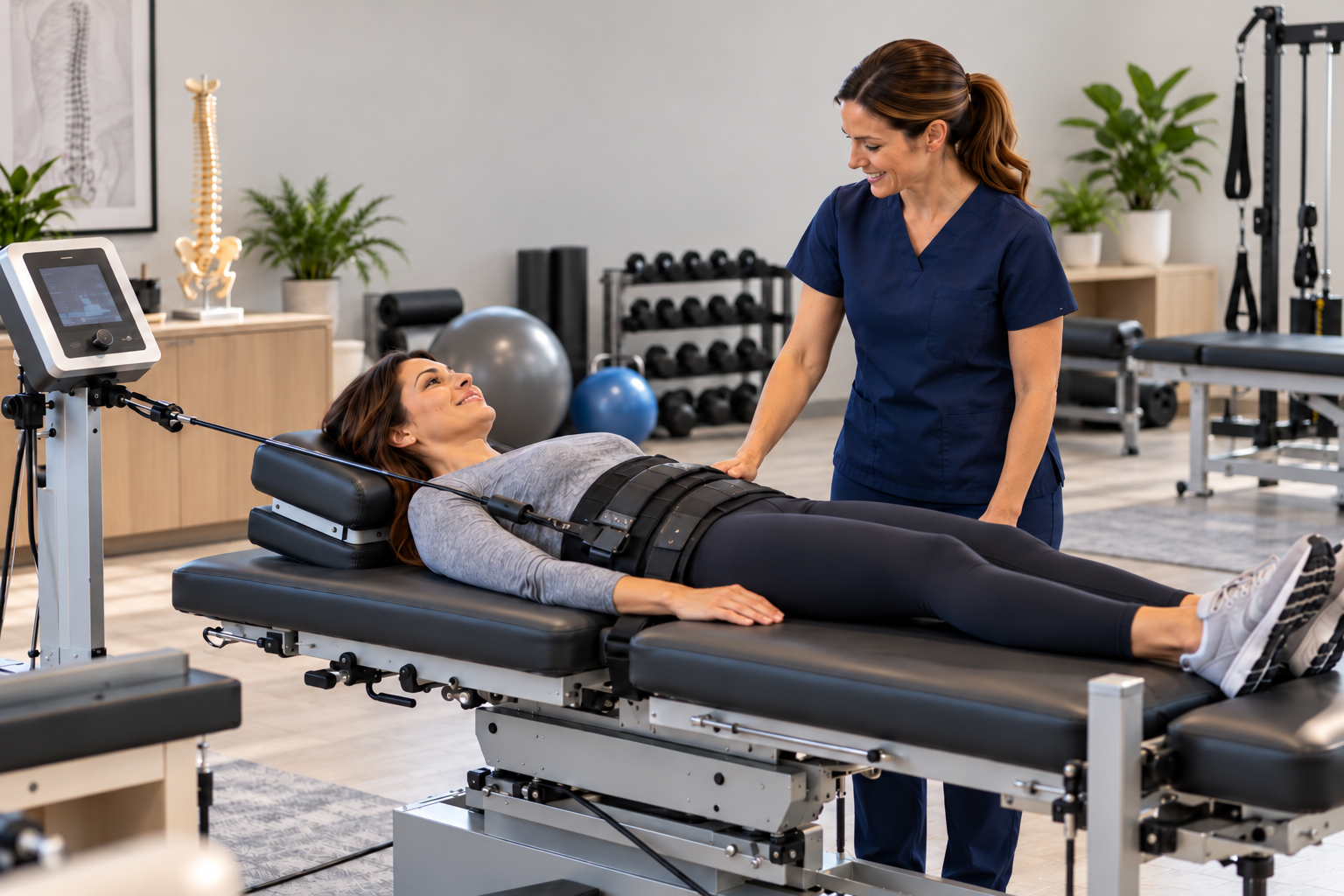
When traction is used, it may be discussed alongside movement education, guided exercise, and other suitable interventions—not as a replacement.

04 — Knowing When Another Option Is Better
Many back concerns do not benefit from routine traction. Your provider can explain when different evidence-based approaches should come first.
Routine lumbar traction is not recommended for low-back pain with or without sciatica; care decisions should reflect current evidence and the individual evaluation.
Not Sure Where to Start?
You don’t need to know which service you need before reaching out. Our team can help you understand the next step and schedule an appointment.
OUR APPROACH
The Right Information, for the Right Reason
We prioritize communication, appropriate selection, and an understanding of what traction can—and cannot—reasonably offer.
01 · Listen & Evaluate
Discuss your symptoms, health background, previous care, and how discomfort affects activities you value.
02 · Discuss Suitability
Review when traction may be considered, when it should be avoided, and what alternatives may be more appropriate.
03 · Focus on Your Goals
Connect recommended care with mobility, strength, daily function, and decisions you feel comfortable making.
Questions About Traction Therapy?
Our team can explain the scheduling process and available next steps.
KNOW THE LIMITATIONS
Is Traction Right for Everyone?
No. Certain health conditions, injuries, or previous procedures may make traction unsuitable. A qualified professional should review your history and discuss potential risks before treatment.
In addition, the research differs between cervical and lumbar traction, so the area being treated and your symptoms matter.
Common Questions
Frequently Asked Questions
Find answers to common questions about spinal traction, suitability, safety, and what to discuss before scheduling.
What is traction therapy?
Traction is a technique that applies a controlled pulling force along a part of the spine. It may be delivered manually or using specialized equipment, depending on the care setting and clinical recommendation.
Can traction therapy help with neck pain?
For some people with chronic neck symptoms that radiate into the arm, cervical traction may be considered alongside exercise and other treatments. It is not appropriate or effective for everyone.
Is traction recommended for low-back pain or sciatica?
Not routinely. Clinical guidelines do not recommend traction as a standard treatment for low-back pain with or without sciatica. Your provider can discuss better-supported options based on your assessment.
Does traction repair or permanently reposition spinal discs?
There is no reliable basis for promising that a course of traction permanently repairs discs or cures spine-related pain. Recommendations should focus on your specific clinical findings and realistic goals.
What happens during a traction session?
If traction is recommended, a clinician explains the setup, positioning, expected sensations, and monitoring. The technique and equipment used depend on the individual evaluation and the services available.
Is traction supposed to hurt?
Traction should not cause significant pain. Tell the clinician right away if you experience increased pain, dizziness, tingling, weakness, or any other concerning symptoms.
Is traction safe for everyone?
No. Some health conditions, injuries, previous procedures, or other factors may make traction unsuitable. A clinician should review your medical history and relevant risks before treatment.
Will I need an X-ray before traction therapy?
Not automatically. Imaging is considered only when clinically appropriate. An examination and health history guide whether any imaging or additional evaluation is needed.
How many sessions will I need?
There is no universal number of visits. If traction is considered, your clinician should explain the rationale, alternatives, a plan for reassessment, and when to discontinue it.
How can I ask about appointments?
Call Columna Care at (385) 615-0555 to discuss appointment availability, evaluation requirements, and which traction services are offered.
Ready to Take the Next Step?
Whether you're experiencing back discomfort, stiffness, or other movement concerns, our team can help you learn about available services and arrange an appointment.
Address: 3601 S 2700 W, West Valley City, UT 84119
Hours: Monday–Saturday · 11:00 AM–8:00 PM
Phone: (385) 615-0555
Email: info@columnacare.com
If you have severe or rapidly worsening symptoms, progressive weakness, or new loss of bowel or bladder control, seek urgent medical evaluation rather than waiting for a routine appointment.